
Inside the Pilates Method

Understanding the brilliance of Joseph Pilates' system.
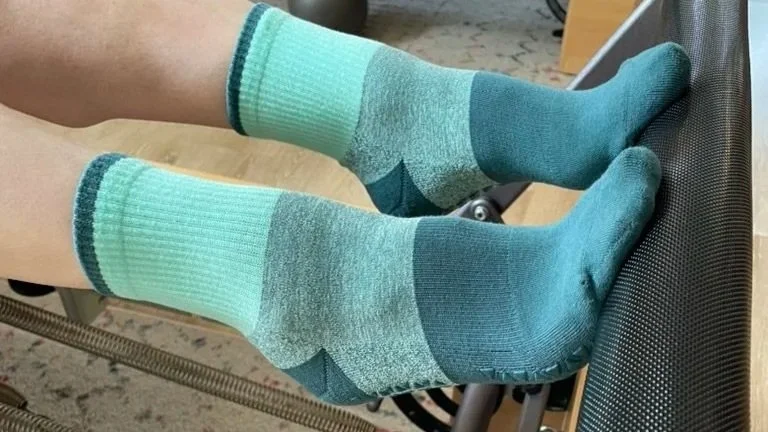
Why Begin with Footwork?

Every Reformer workout begins the same way.

Footwork.

Most people assume it's simply a warm-up.

It isn't.

Joseph Pilates intentionally placed Footwork at the beginning of the workout because he wanted it to teach your body something you'll use in every exercise that follows.

What was he teaching?


Pilates isn't simply a collection of exercises.

It's the Pilates Method.

Joseph Pilates designed a complete system, with every exercise intentionally placed to prepare your body for what comes next. Like chapters in a book, each exercise builds on the one before it.

That's why every movement has a purpose.

That's also why we begin with Footwork.


Why Joe Put Footwork First

At first glance, Footwork can seem simple. You're lying on your back, pressing the carriage away with your feet. Many people think of it as the warm-up.

Joe saw it differently.

Before asking your body to balance, articulate the spine, support your weight on your arms, or coordinate more complex movements, he wanted to establish a strong foundation first.


What Is Footwork Teaching?

As you move through the Footwork series, you're learning to:

  • Create even pressure through both feet.

  • Align your ankles, knees, and hips.

  • Stabilize your pelvis while your legs move freely.

  • Connect movement with breath.

  • Initiate movement from your center instead of simply pushing with your legs.

These aren't isolated skills.

Every exercise that follows asks your body to recall something it learned during Footwork.

Joe wasn't just strengthening your legs.

He was teaching your nervous system how to organize movement.


Why So Many Foot Positions?

If the goal were simply stronger legs, one foot position would have been enough.

Instead, each variation asks your body a different question.

Can you maintain alignment?

Can you find equal weight through both feet?

Can you organize the inner thighs?

Can you create mobility through the ankles without losing stability?


Each variation builds another layer of understanding and prepares your body for what's coming next.


It Starts From the Ground Up

Joe believed healthy movement begins with a strong, intelligent foundation.

Our feet are our first connection to the Reformer and, ultimately, to the ground when we walk through life. That's why the Pilates Method begins here.

The awareness you develop during Footwork influences your standing posture, your balance, your gait, and even how efficiently you move through the rest of the workout.

It's no coincidence that many clients leave Pilates saying they feel taller, lighter, or more connected. That sensation doesn't happen by chance. It begins within the first few minutes of class because Joe intentionally designed it that way.


The Takeaway

Footwork isn't simply where the workout begins.

It's where Joe began teaching your body how to move.

The alignment, balance, precision, and awareness you develop in these first few minutes become the foundation for every exercise that follows.

When you understand that, you stop seeing Pilates as a series of individual exercises and begin to appreciate it for what it truly is:

The Pilates Method.
Balance and Pilates

Well, we learned last week that winter isn’t finished with us quite yet! This is a great time to talk about safety in slippery situations and how to avoid falls. We spoke with two of our Longevity community members, who also happen to be experienced physical therapists.  

Stacey Siats and Sada Quijada have both been regular attendees at Longevity classes. They offer unique perspectives on Pilates and how the practice benefits everyone. “Pilates is a comprehensive workout that gives us the opportunity to work through our full muscle length and joint range of motion. This combination builds muscle strength through greater motion and supports healthy, stable joints. This stability contributes to our balance and coordination,” says Stacey.

Both Sada and Stacey were adamant about how balance plays an important role in winter terrain safety. “Balance requires a strong base of standing and walking. Folks who stand and walk most of their day will have better balance than folks who sit more than they stand,” says Sada. “A simple and overlooked balance aid is arm swing when walking. Especially on odd terrain – it’s better to have one’s arms helping the walk by initially swinging so that they are already out and ready to right one’s balance if needed.”

According to Stacey, “Our balance is a combination of body awareness and environmental awareness. Our joints include proprioceptors that let us know where our bodies are in space. Our muscle end range allows the joint to move and our muscle strength, along with ligaments and tendons, controls the joint. If we are lacking in full movement, joint positional awareness (due to injury), or impaired strength, this will directly impact our ability to control unexpected movements like falls or slips. We use our eyes for balance, our ankles with small balance changes, our hips with larger balance disturbances, and with a really big balance disturbance, we take a step. Think about all of the muscles involved from our feet through our core, and also our breath. Now if we happen to be unsuccessful with preventing the fall, how does our body respond? Our arms reach out to protect our head. Stable wrist joints, shoulders, and core can help with the impact. Doesn’t that sound like what we use when practicing Pilates?”

Added Sada, “Pilates has one of the best foot and ankle strengthening strategies of any exercise I have experienced. I have been extremely pleased with all the footwork focus that has impacted my own ankle and lower leg strength!”

What if you’re not in class and you want to work on your balance? Sada’s favorite exercises for walking balance are Tandem Walking and Tandem Stance. “Tandem walking is basically pretending to walk on a tightrope using a line on the floor. Tandem stance is standing in a narrow way with the heel of one foot stacked in front of the toes of the other foot. I love having people practice tandem stance and single leg stance in a doorway using the door frame for both upright posture and balance support. Foot and ankle strength are very important components of balance alongside posture.”

You can be sure that each of your Longevity instructors is creating class content to enhance balance, muscle strength, and joint mobility and stability. We are so grateful to have knowledgeable clients who share their expertise with our community!

Stacey Siats has been a practicing physical therapist for 23 years. She is currently working for the Robbinsdale School District on their Birth to Three team, providing intervention for children at risk and diagnosed with developmental delays. She’s also employed as an adjunct professor in St. Kate’s Doctor of Physical Therapy program.

Sada Quijada started her career in bodywork at 19 as a Swedish Massage therapist. She’s been introduced to many bodywork techniques and has certified in Lymphedema Therapy, and Esoteric Healing. Massage Therapy is one of her favorite art forms. Sada has worked in Physical Therapy for 25 years, specializing in neurologic conditions. Balance training is a skill she utilizes frequently.
